
(Published in the Postimees supplement "Promoting Rural Life" November 2015)
Since the nice, warm autumn continues outside and bulbs can still be planted, I would encourage you to experiment with one of the less common and used types of bulb flowers.
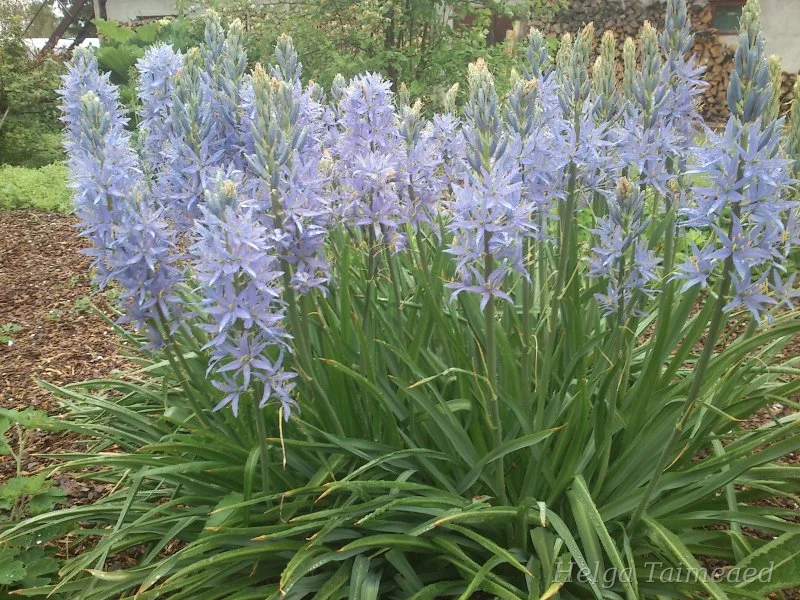
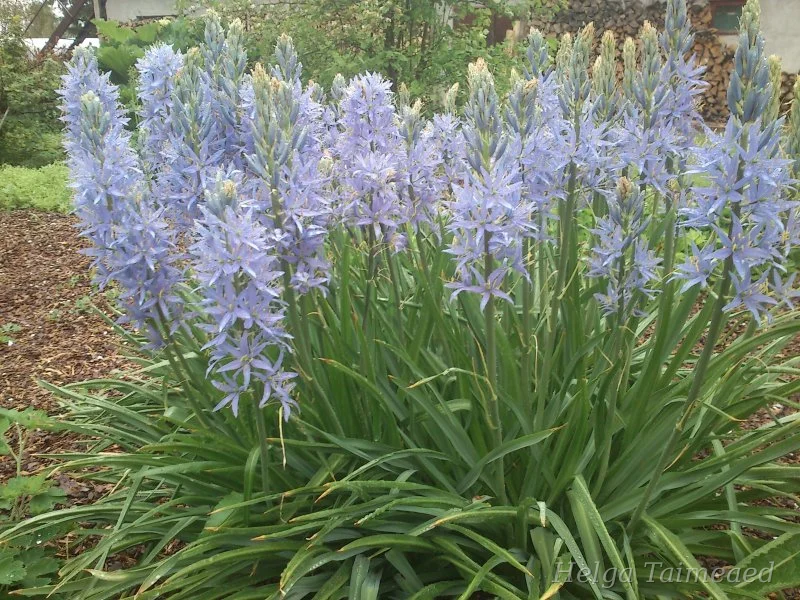
Camassia are a nice change in the first half of summer for those who would like to experiment with a slightly different kind of flower after daffodils and next to the late representatives of the tulip sea, just before the big summer flower parade. Depending on the species and variety, their 20-100 cm high flower stalks bear quite large star-shaped flowers that gradually open over 4-6 weeks. The flowering time can be from late May to early July - it depends on the beginning of spring and the air temperature. Despite the name, which may make you doubt their suitability for our climate, they are frost-resistant and not fussy plants at all. Sun or partial shade, normal moderately moist or even quite moist garden soil - this is completely sufficient. Camassia can also be grown where lilies, tulips and daffodils do not want to be due to humidity. However, excess humidity is a bad thing. I especially like that there is no need to dig/dry the bulbs every year. Thinning should only be done when the bulb nest has grown very dense and the flowering has therefore become smaller. A good planting depth is 12-15 cm. By planting under trees in diffused light, where fallen leaves are not necessarily scraped up, the bulbs are also protected from the crisper cold in a snowless winter. But of course, compost, spruce branches or other suitable material can also be used to protect the bulbs in autumn.
Camassia grows naturally in North America and gets its name from the Native Americans who used the starchy bulbs of some species for food. However, it did not reach European gardens until the 19th century. Leichtlin's Camassia (Camassia leichtlinii), named after a German gardener, has several beautiful varieties:
'Semiplena' with its white semi-double flowers has a very long flowering period thanks to its sterile flowers and also holds up well as a cut flower in a vase.
With its large creamy-white flowers and white-green striped foliage, 'Sacajawea' is a sight to behold from the moment you poke your nose out of the ground. Its foliage also stays "fresh" longer than other varieties after flowering.
The flowers of the 'Caerulea' variety group vary from purple-blue to blue tones.